


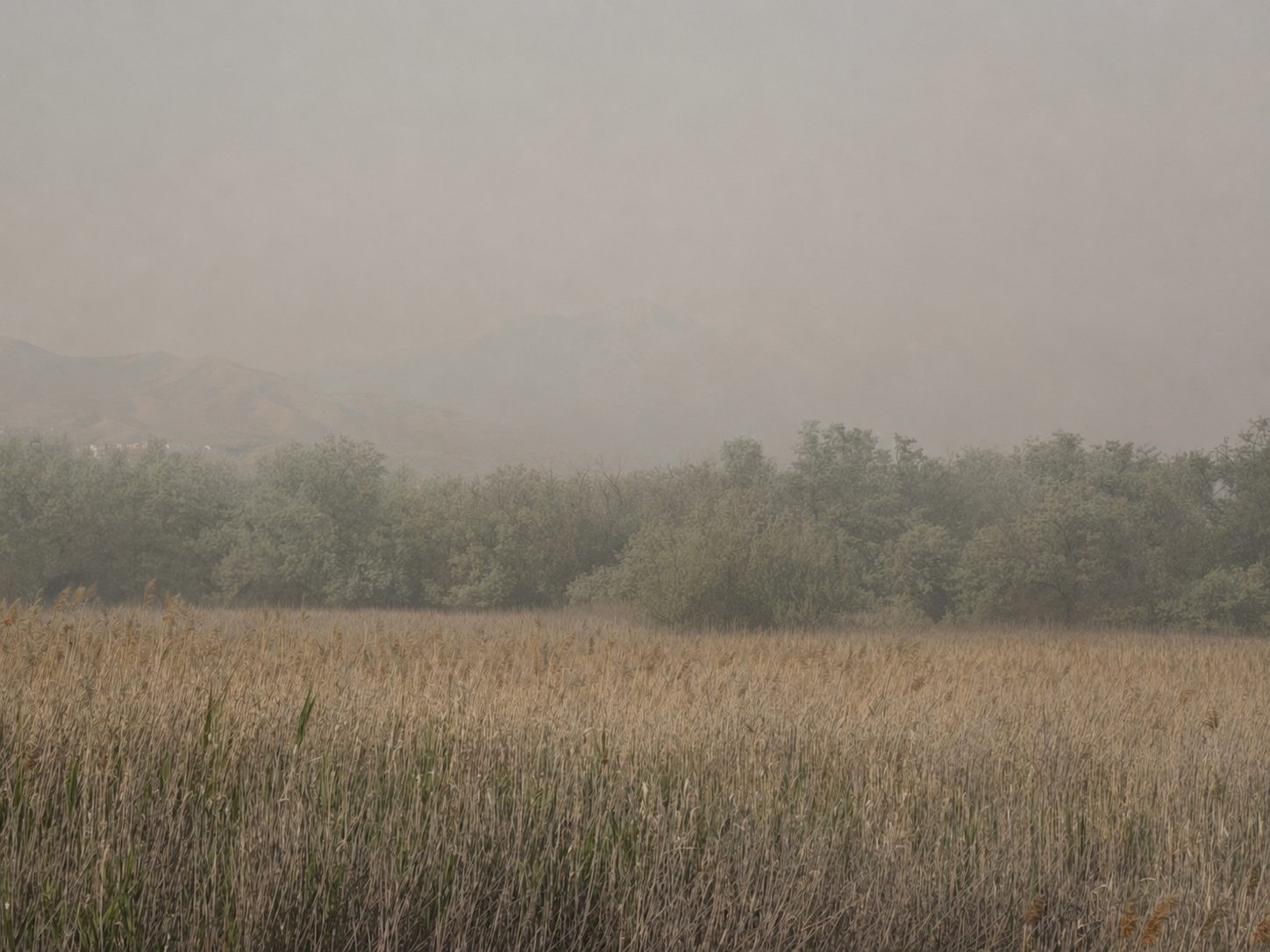
Step outside in Eagle Mountain, Saratoga Springs, or Lehi right now and you feel it immediately. The mountains have disappeared behind a wall of haze. Ash is falling like snow. The air smells like a campfire you can't find and can't escape.
Wildfire smoke has pushed Utah to the worst air quality in the nation today. Salt Lake City is currently ranked the 10th worst major city in the world for air quality.
This is not a normal hazy day. This is a public health event — and the doctors and air quality experts weighing in are being direct about the risks.
I am a real estate agent, not a health professional. For medical advice, consult your doctor. This article is meant to help Utah County families understand what's happening and what steps to take.
What's Causing It
Multiple fires are burning simultaneously and their smoke is converging over the Wasatch Front and Utah Valley.
Per Fox13's June 23 coverage, the primary driver is the Hastings Fire in Tooele County, which has reached 20,000 acres and is 25% contained. Smoke from that fire is blowing east into the Salt Lake Valley.
Closer to Utah County, per ABC4's June 23 reporting, the Iron Fire near Eureka is burning 31,000 acres and directly affecting air quality south of Provo — which puts it squarely in Utah County's backyard. The Dutchman Fire is adding 80 more acres to the load.
Kerry Kelly, co-founder of Tellus, an air quality monitoring company, told Fox13: "To the south and west, we've got the Iron Fire in Eureka, and that's right now affecting air quality south of Provo, Springville area, but with winds shifting, things are changing really quickly."
Kelly noted the impact from wildfire smoke this year is worse than last year.
Community members are feeling it. "It's like we're trapped in this bowl of smoke, and that's really stressful," Joshua Shutkind told Fox13. That bowl is Utah Valley — the geography that makes our area beautiful in good conditions traps smoke in bad ones.
What the Doctors Are Saying
Dr. Denitza Blagev, a pulmonologist with Intermountain Health, spoke to KSL on June 22 and was direct:
"It's really bad for all of us. There's no safe level of air pollution, especially when it gets into these ranges."
Dr. Blagev said wildfire smoke irritates the lungs, eyes, and throat while also increasing the risk of more serious health issues — including heart attack and stroke. Not just respiratory problems. Cardiovascular risk too.
Those most vulnerable:
- Children, whose lungs are still developing
- Elderly adults
- Pregnant women
- Anyone with asthma, COPD, or other respiratory conditions
- Anyone with heart disease
But Dr. Blagev was clear that healthy people are not off the hook: "Even if you don't have symptoms, just realize you're getting exposed. It's still worth limiting your exposure."
For anyone with asthma or COPD specifically: "Make sure you have your action plan or your rescue medications on hand and use them appropriately."
Symptoms to watch for, per Dr. Blagev and per the Utah DEQ:
- Shortness of breath
- Chest tightness
- Coughing or wheezing
- Irritated or burning eyes
- Headache
- Unusual fatigue
Note that symptoms may not appear immediately even with significant exposure. Don't wait for symptoms to take protective action.
If symptoms are severe or worsening, contact your doctor or seek medical attention.
How to Check Air Quality Right Now — By Your Specific Address
County-wide AQI numbers tell part of the story. But Kerry Kelly of Tellus made an important point: "Air quality can be quite different in pretty short distances, so you might be able to escape it and be safer."
That means checking your specific neighborhood matters — not just the county average.
air.utah.gov / deq.utah.gov/division-air-quality Utah DEQ's official real-time monitoring. The most authoritative source for Utah-specific data.
IQAir — Utah County Real-time AQI for Utah County with a map view showing conditions across different parts of the county.
AirNow.gov The EPA's national AQI map. Enter your zip code for current conditions and a three-day forecast.
PurpleAir Crowd-sourced private air quality sensors. Neighborhood-level data — useful for seeing what the air is doing on your specific street.
KSL Weather App Air quality updates integrated into the forecast. Easy for day-to-day checking.
Dr. Blagev put it simply: "I'm not saying never go outside, but just look at the numbers."
Conditions are changing quickly with shifting winds. Check more than once today.
What the AQI Colors Mean for Your Daily Decisions
Green (0-50): Good. No restrictions.
Yellow (51-100): Moderate. Sensitive individuals may want to limit prolonged outdoor exertion.
Orange (101-150): Unhealthy for Sensitive Groups. Children, elderly, and people with heart or lung conditions should reduce outdoor exertion.
Red (151-200): Unhealthy. Everyone should reduce prolonged outdoor exertion. Sensitive groups should avoid outdoor activity.
Purple (201-300): Very Unhealthy. Everyone should avoid prolonged outdoor exertion. Sensitive groups stay indoors.
Maroon (301+): Hazardous. Everyone avoid all outdoor activity.
As of June 23, Utah, Salt Lake, Tooele, Davis, and Weber counties are in the Orange category. The three-day forecast puts conditions moving toward Red. Check before you go outside — the category may have changed since this was written.
What to Do Right Now
Outdoors
Stay inside when you can. This is the simplest and most effective protection. Kerry Kelly confirmed: "Air quality is generally better inside, especially if you have some kind of central HVAC system."
Limit outdoor time and intensity. The harder you breathe, the more smoke you pull in. On Orange or Red days, skip prolonged outdoor exercise and limit how long kids are outside.
If you're in a sensitive group and must go outside, a well-fitted N95 or KN95 mask provides better filtration than a cloth mask. For healthy adults on a brief errand, limiting time outside matters more than masking.
Don't add to the pollution. Per Salt Lake City's air quality guidance, on bad air quality days avoid wood burning, unnecessary idling, and activities that release VOCs.
Indoors
Close windows and doors. Keep the outdoor air out.
Run your AC on recirculate. Do not use fresh air intake during heavy smoke events. Kerry Kelly specifically confirmed indoor HVAC systems help.
Check and replace your air filter. A clogged filter moves less air and filters less effectively. Utah County summers are already dusty — wildfire smoke accelerates filter clogging. Check yours today.
Run a HEPA air purifier. Per the American Lung Association, a portable HEPA air cleaner is one of the most effective tools for maintaining clean indoor air during wildfire smoke events. Run it in rooms where your family spends the most time.
Create a clean room if needed. Per the American Lung Association, if maintaining clean air throughout your home is difficult, designate one room where you run a HEPA purifier continuously. Especially important for children and anyone with respiratory conditions.
A Note for Families With Kids in Utah County
Children's lungs are still developing. They breathe more air relative to their body weight than adults. And they spend more time outside.
Check the AQI before school drop-off and before outdoor recess or sports. If the AQI is Orange or higher, keep kids inside when possible.
This Is Not Just a Today Problem
Wildfire smoke is part of summer life in Utah County. The Iron Fire. The Hastings Fire. The Glambert Lane Fire on Lake Mountain in Saratoga Springs earlier this month. Summer 2026 has already seen significant fire activity and fire season typically runs through September.
The tools above give you real-time data to make daily decisions all summer. A HEPA air purifier, N95 masks on hand for sensitive family members, and a regularly changed HVAC filter are the practical preparations that make a real difference across the whole season.
I am here if you have any questions about life in Utah County.
Relocating to Utah County? Let's talk →
Frequently Asked Questions
How do I check air quality in Eagle Mountain, Saratoga Springs, or Lehi right now? The best tools are air.utah.gov, deq.utah.gov/division-air-quality, iqair.com/air-quality/usa/utah/utah-county, airnow.gov (enter your zip code), purpleair.com/map (neighborhood level), and the KSL Weather app.
Is the air quality in Utah County dangerous right now? As of June 23, 2026, wildfire smoke has pushed Utah to the worst air quality in the nation. Dr. Denitza Blagev of Intermountain Health said plainly: there is no safe level of air pollution at these ranges.
Who is most at risk from wildfire smoke in Utah County? Children, elderly adults, pregnant women, and anyone with asthma, COPD, or heart conditions are most vulnerable. Dr. Blagev emphasized that even healthy people should limit exposure.
Do I need to wear a mask outside? For healthy adults doing a brief errand, limiting time outside is more important than masking. If you're in a sensitive group — children, elderly, pregnant, or have a heart or lung condition — and need to be outside for an extended period, a well-fitted N95 or KN95 provides better filtration than a cloth mask.
What fires are causing the smoke in Utah County? As of June 23, the primary sources are the Hastings Fire in Tooele County (20,000 acres, 25% contained), the Iron Fire near Eureka (31,000 acres) directly affecting air quality south of Provo and into Utah County, and the Dutchman Fire adding 80 more acres. Winds are shifting quickly.
How do I keep indoor air clean during wildfire smoke? Close windows and doors. Run your AC on recirculate. Run a HEPA air purifier in occupied rooms. Check and replace your HVAC filter. For severe conditions, create a single clean room with a continuously running HEPA purifier.
Related reading:
- Wildfire Risk in Utah County: How Fires Start, Spread, and Get Contained
- Eagle Mountain Real Estate Market Update: June 2026
- Saratoga Springs Real Estate Market Update: June 2026
- Utah School Phone Ban 2026: What It Means for Families in Utah County
- What Temperature Should You Set Your Thermostat in Summer?
- Wildfire evacuation checklist for Saratoga Springs
- Wildfire insurance coverage for Utah County homes
Sources: KSL — Doctors warn of health risks as wildfire smoke drifts across Utah: Dr. Denitza Blagev Intermountain Health pulmonologist, no safe level of air pollution, heart attack and stroke risk, rescue medications for asthma COPD, symptoms may not appear immediately, June 22 2026; Fox13 — Wildfire smoke settles over Utah: Kerry Kelly Tellus co-founder, Iron Fire affecting south of Provo, smoke worse than last year, air quality better inside with HVAC, Joshua Shutkind bowl of smoke quote, June 22-23 2026; ABC4 — Wildfire smoke impacting air quality: Hastings Fire 20,000 acres 25% contained, Iron Fire 31,000 acres, Dutchman Fire 80 acres, Orange AQI Utah Juab Salt Lake Tooele Davis Weber, three-day forecast Unhealthy, June 23 2026; Utah DEQ — deq.utah.gov/division-air-quality: official real-time monitoring, unhealthy forecasts Wasatch Front; IQAir — Utah County real-time AQI; American Lung Association — air pollution protection, HEPA air cleaner, keep windows closed, AC recirculate; American Lung Association — DIY wildfire clean room; Salt Lake City sustainability — avoid wood burning, no idling, avoid VOCs.
Written by Kat Ashby, Principal Broker and Realtor® at RootQuest Realty LLC in Saratoga Springs, Utah. Kat holds a Utah Division of Real Estate Principal Broker license (Credential #10382396-PB00). She is a real estate agent, not a health professional. For medical advice, consult your doctor. She has been actively selling in Utah County since 2020, specializing in buyer and seller representation, new construction, and corporate relocation through Altair Global. She is fluent in English and Portuguese, earned her bachelor's degree in Psychology from Brigham Young University, and lives in the community she sells in.